



When a dentist recommends periodontal treatment, one of the first questions most people ask is, “How will I pay for this?” The cost of gum disease treatment varies based on the type and extent of care needed, and for many patients, the price tag can feel like a barrier to getting started. The good news is that affordable pathways exist, and putting off care almost always leads to more complex and costly treatment down the road.
At Advanced Periodontics of New Jersey, we believe cost should never be the reason someone delays gum care. Drs. Matei and Peto are committed to providing the highest level of periodontal services to patients throughout Bergen County and the surrounding area, and we prioritize offering flexible payment solutions to help every patient move forward with confidence.
What Factors Affect the Cost of Gum Disease Treatment?
The cost of treating gum disease depends heavily on how far the condition has progressed. Early-stage disease may only require non-surgical interventions, while chronic gum disease typically calls for more involved procedures. Several variables influence the final investment.
The specific treatments involved, the number of teeth or quadrants affected, the technology used, and whether any additional procedures are needed to address bone or tissue loss will all shape the overall cost. A comprehensive evaluation with our team allows us to provide a clear picture of the recommended treatment and associated fees before any work begins.
Understanding Fee-for-Service Periodontal Care
At Advanced Periodontics of New Jersey, we follow a fee-for-service model. This means we do not accept insurance as direct payment or participate with insurance networks. It also means our doctors can focus on recommending the care that is truly right for your health, rather than making decisions around insurance restrictions.
This approach allows us to spend more time with each patient, use advanced technology, and focus on long-term results. Although we do not bill insurance directly, some patients may be able to submit a claim to their insurance provider for possible reimbursement, depending on their plan.
Financing Options That Make Treatment Accessible
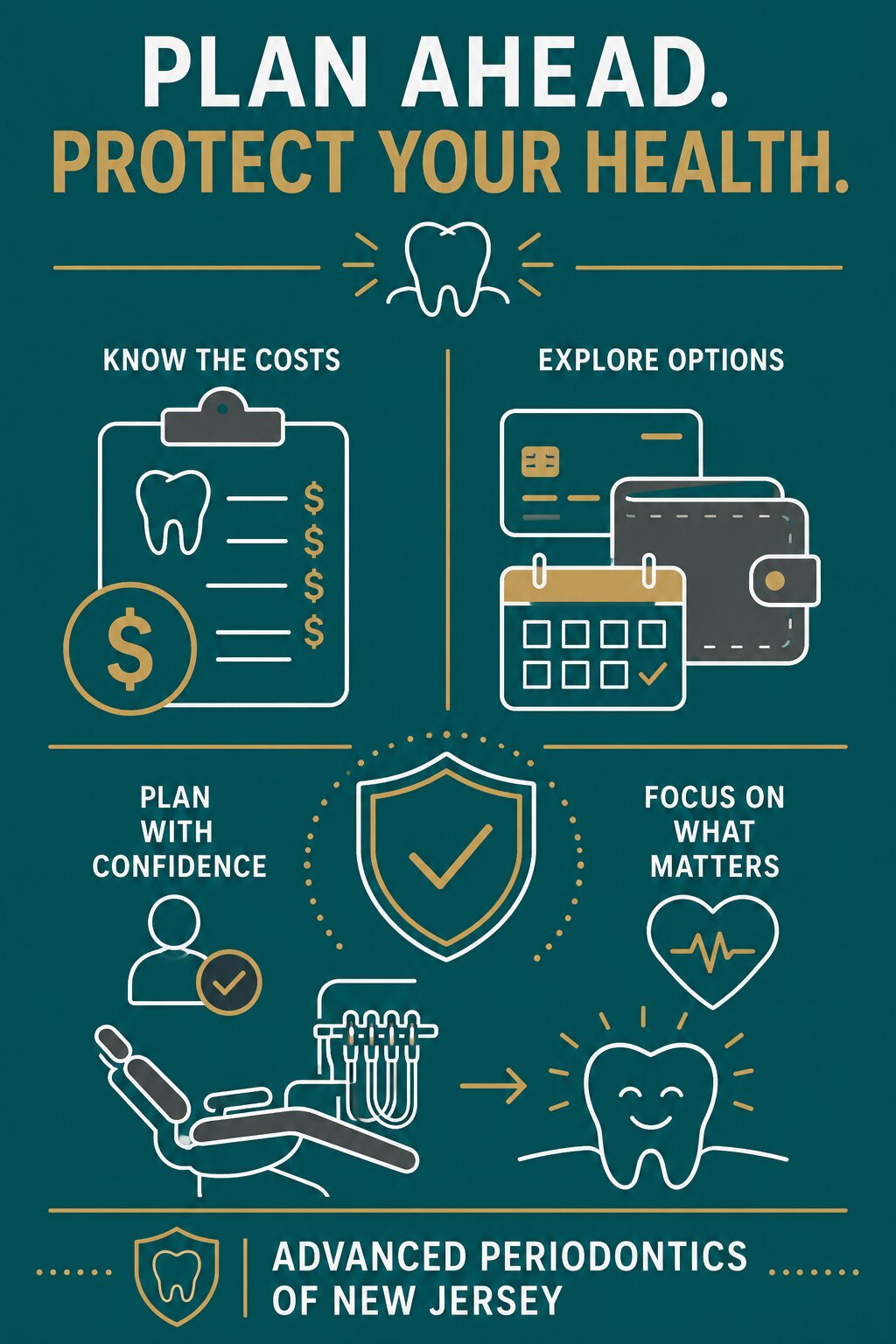
We know periodontal care is a meaningful financial commitment for most patients, so we have partnered with multiple third-party financing providers to make treatment more manageable. These options allow patients to spread the cost into monthly payments rather than paying everything up front. Our financing page provides full details on all available options.
We currently work with CareCredit, Cherry, Alpheon, and Lending Club. Each provider offers different plan structures, and many include low or no-interest options for qualifying patients. Our team is happy to walk you through the details of each program so you can choose the option that best fits your budget.
Common Periodontal Treatments and What They Involve
Understanding what your treatment involves can also help you plan financially. Below is a brief overview of some of the procedures our team commonly performs.
- Scaling and Root Planing: A deep cleaning procedure that removes bacterial deposits from below the gumline and smooths root surfaces to discourage reattachment of harmful bacteria.
- LANAP Laser Therapy: A minimally invasive laser-based treatment that targets diseased tissue while preserving healthy gum tissue, typically with a shorter and more comfortable recovery.
- Osseous Surgery: A surgical procedure that reduces the depth of periodontal pockets to make it harder for bacteria to accumulate and cause further damage.
Each of these treatments carries a different cost profile, and some patients require a combination of approaches. Our team will outline every recommended step during your consultation so there are no surprises.
Why Delaying Treatment Costs More in the Long Run
One of the most important financial considerations for gum disease is timing. The American Academy of Periodontology notes that periodontal disease can become increasingly costly to treat as it advances, and that addressing it early is better for your health and your wallet. Patients who put off care often find themselves facing tooth loss, bone grafting, or implant placement, all of which involve significantly greater expense.
Early intervention keeps the scope of treatment narrower, preserves more of your natural tissue and bone, and limits the number of procedures needed over time. The investment you make today in treating gum disease is an investment in avoiding far greater costs later.
Take the Next Step at Advanced Periodontics of New Jersey
Advanced Periodontics of New Jersey brings together the clinical knowledge of Drs. Matei and Peto to deliver board-level periodontal care with a patient-centered approach. Our River Edge practice is equipped with advanced technology and staffed by a team committed to making every aspect of the experience, including the financial side, as straightforward as possible. We are proud to serve patients throughout Bergen County and surrounding New Jersey communities.
Navigating periodontal care is easier with a team that takes the time to answer your questions clearly and honestly. From treatment plans to financing options, Drs. Matei, Peto, and our team are here to walk you through every step of the process. To schedule a consultation, reach out using our contact form.