





Living with diabetes means managing more than just your blood sugar levels. Your oral health plays a surprisingly significant role in your overall diabetes management, and the connection between gum disease and diabetes works both ways. Research shows that people with diabetes are two to three times more likely to develop periodontal disease, and untreated gum disease can make blood sugar harder to control. Understanding this relationship is essential for protecting both your smile and your health.
At Advanced Periodontics of N.J., Dr. Peto specialize in helping patients navigate the complex relationship between periodontal health and systemic conditions like diabetes. With advanced education in periodontics and implant dentistry, our team provides comprehensive care that addresses both the oral and systemic aspects of gum disease.
How Diabetes Increases Your Risk for Gum Disease
Diabetes impairs your body’s ability to fight infection, making your gums more vulnerable to bacterial invasion. When blood sugar levels remain elevated, glucose builds up in your saliva, creating an ideal environment for harmful bacteria to thrive. These bacteria bind to food particles, forming plaque that irritates your gums and causes inflammation.
High blood sugar also reduces saliva production, causing dry mouth. Saliva normally helps clear away bacteria and neutralize acids in your mouth, so when you have less of it, your risk for both cavities and gum disease increases significantly. Diabetes can cause the salivary glands to make less saliva, and when less saliva is present, the likelihood of dental cavities and gum disease increases.
Additionally, diabetes weakens your white blood cells, which are your body’s primary defense against infections. This compromised immune response means that once gum disease develops, it progresses more rapidly and becomes more severe in people with diabetes compared to those without the condition.
Prediabetes and Early Gum Changes
The connection is not limited to a formal diabetes diagnosis. Even prediabetes, where blood sugar runs higher than normal but has not yet reached diabetic levels, is associated with an increased likelihood of gum inflammation. Elevated glucose, even in this earlier stage, can begin shifting the balance of bacteria along the gumline before someone realizes their blood sugar is trending upward. This makes a periodontal exam a useful early signal, sometimes surfacing before a person is even screened for prediabetes elsewhere.
How Gum Disease Affects Diabetes Management
The relationship between these two conditions doesn’t flow in just one direction. Gum disease can also affect insulin sensitivity and increase the risk of heart and kidney disease in diabetes patients. When you have periodontal disease, the chronic inflammation in your gums releases inflammatory markers into your bloodstream. These markers interfere with your body’s insulin function, making it harder for your cells to absorb glucose from your blood.
Periodontal infections create a constant state of inflammation in your body. Your immune system responds by releasing cytokines and other inflammatory mediators that promote insulin resistance. This creates a problematic cycle where poorly controlled diabetes worsens gum disease, and untreated gum disease makes blood sugar more difficult to manage.
The good news is that addressing gum disease can help improve glycemic control. Studies have shown that patients who receive periodontal treatment often see improvements in their A1C levels over time. This makes professional care an important component of comprehensive diabetes management. The same inflammatory pathway is part of why gum health and heart disease are so closely linked, and why periodontal care is increasingly viewed as a piece of whole-body health rather than an isolated concern.
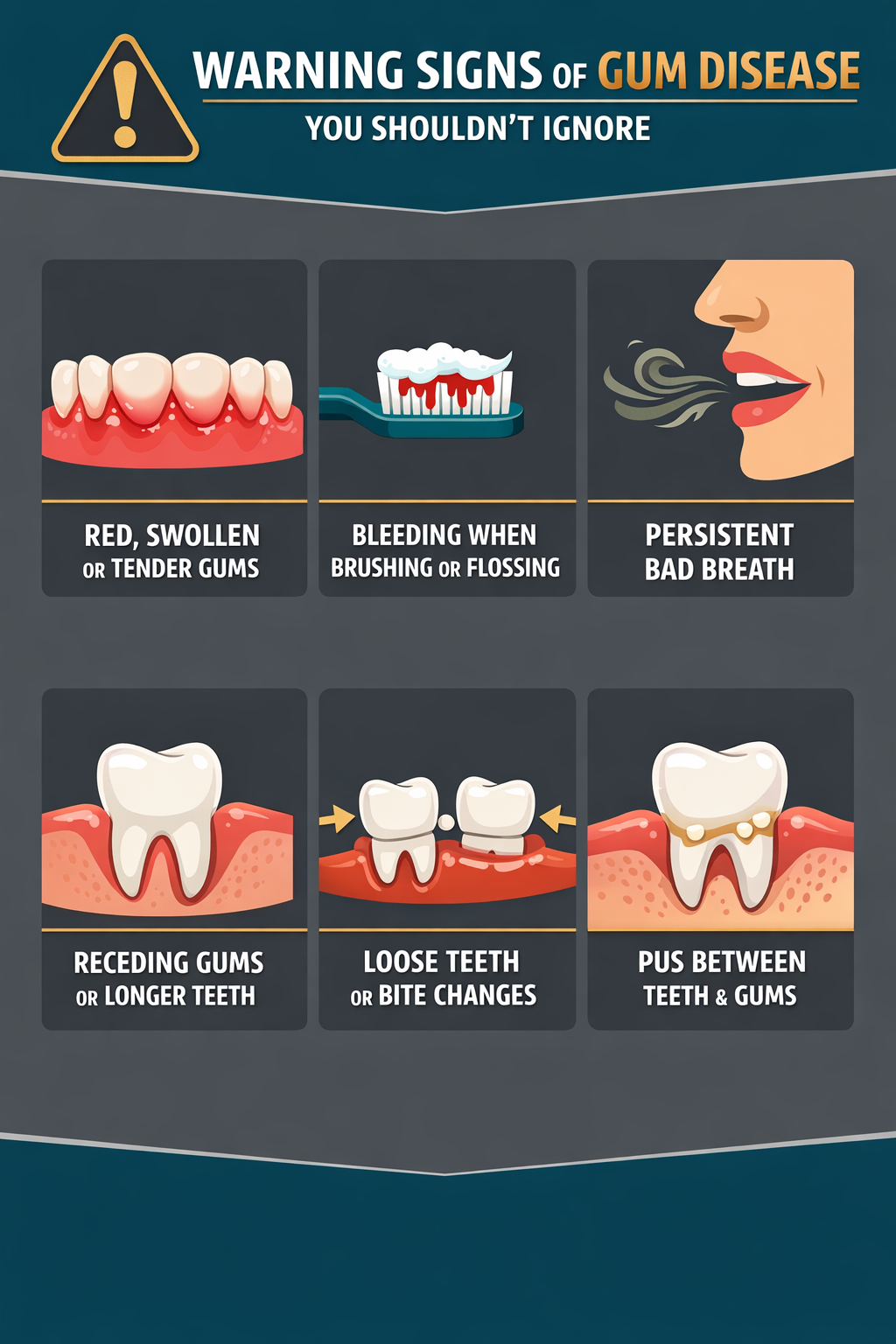
Warning Signs You Shouldn’t Ignore
Pinpointing the early warning signs of gum disease is crucial for people with diabetes. You should schedule an appointment with a periodontist if you notice any of these symptoms:
- Red, swollen, or tender gums
- Bleeding when you brush or floss
- Bad breath or a lingering bad taste in your mouth
- Receding gums or teeth that appear longer
- Loose teeth or changes in your bite
- Pus between your teeth and gums
Early intervention can prevent these symptoms from progressing to advanced periodontal disease, which can lead to tooth loss and other serious complications.
Protecting Your Oral Health with Diabetes
Managing both conditions requires a proactive approach to your oral health. Brush your teeth at least twice daily with fluoride toothpaste, and floss once a day to extract plaque from between your teeth and under your gumline. These simple habits can substantially reduce your risk of developing gum disease.
Schedule regular dental checkups and professional cleanings every six months, or more often if advised by your periodontal specialist. During these visits, your dental team can detect early signs of gum disease and administer treatment before the condition worsens. Always inform your dental professionals that you have diabetes so they can tailor your care appropriately.
Maintaining good blood sugar control is equally important for protecting your gums. Work together with your diabetes care team to keep your A1C levels within your target range. When your blood sugar is well-managed, your body is better able to fight infections and heal from dental procedures. If you smoke, quitting is one of the most important steps you can take for both your diabetes and your oral health, as smoking significantly increases your risk for periodontal disease.
What to Expect at a Periodontal Visit When You Have Diabetes
A periodontist treating a patient with diabetes typically takes a broader view than a routine cleaning alone. Expect a conversation about your recent A1C readings, current medications, and any changes in blood sugar control, since these factors influence how your gums respond to treatment and how quickly they heal. Pocket depth measurements around each tooth help track whether inflammation is stable, improving, or progressing.
Your periodontist may also recommend more frequent maintenance visits than the standard six-month interval, since consistent monitoring is one of the most effective ways to catch and manage the inflammatory cycle before it accelerates. Coordinating this schedule with your physician or endocrinologist helps make sure both sides of your care are working from the same picture of your health.
Take Control of Your Oral and Overall Health at Advanced Periodontics of N.J.
Understanding the connection between gum disease and diabetes empowers you to take control of both conditions. Dr. Peto is a LANAP-certified periodontist who utilizes cutting-edge laser technology for minimally invasive periodontal treatments. His published research on bone formation and cosmetic periodontal procedures, along with his clinical teaching experience at UCLA, ensures you receive evidence-based care that addresses the unique challenges of managing periodontal disease with diabetes.
Don’t wait until symptoms become severe. Contact our River Edge office today to schedule a comprehensive periodontal evaluation and discover how we can help you maintain optimal oral health while managing your diabetes.
Frequently Asked Questions About Gum Disease and Diabetes
Can treating gum disease actually improve blood sugar control?
Research has shown that patients who receive periodontal treatment often see improvements in their A1C levels over time. Reducing the chronic inflammation caused by gum disease appears to ease its interference with insulin function, making professional periodontal care a useful piece of overall diabetes management.
Why does diabetes increase the risk of gum disease?
Elevated blood sugar weakens the body’s ability to fight infection, reduces saliva production, and creates an environment where harmful bacteria thrive along the gumline. Together, these effects make gum tissue more vulnerable and allow periodontal disease to progress more quickly once it starts.
What are the early warning signs of gum disease that people with diabetes should watch for?
Red, swollen, or bleeding gums, persistent bad breath, gums that appear to be pulling away from the teeth, and loose teeth are all signs that warrant a periodontal evaluation. Catching these changes early makes treatment simpler and helps protect blood sugar control at the same time.
How often should someone with diabetes see a periodontist?
Many patients with diabetes benefit from periodontal maintenance visits more frequent than the standard six-month interval, often every three to four months, depending on how well blood sugar is controlled and how the gums are responding to care. Your periodontist can recommend the right interval for your situation.
Does prediabetes also increase the risk of gum problems?
Yes. Even blood sugar levels in the prediabetic range are associated with a higher likelihood of gum inflammation. Because this shift can appear before someone is diagnosed with prediabetes elsewhere, a periodontal exam sometimes provides one of the earliest signals that blood sugar deserves closer attention.