




Single tooth implants and implant-supported bridges both replace missing teeth by anchoring a permanent restoration to your jawbone, but they solve different problems. A single tooth implant supports one crown and leaves the neighboring teeth completely untouched, while an implant-supported bridge uses two implants to anchor a span of replacement teeth across a gap of two or more missing teeth. The right choice depends on how many teeth are missing, how much healthy bone is available at the site, and how your gums and remaining teeth have held up over time.
At Advanced Periodontics of N.J., our dental implants services are delivered by Dr. Marlen Matei and Dr. Peto, two board-certified periodontists whose training spans implant placement, surgical planning, and long-term restorative outcomes. Before recommending either path, we evaluate the full picture of your oral health, because in implant dentistry the planning matters as much as the procedure itself.
What Is a Single Tooth Implant?
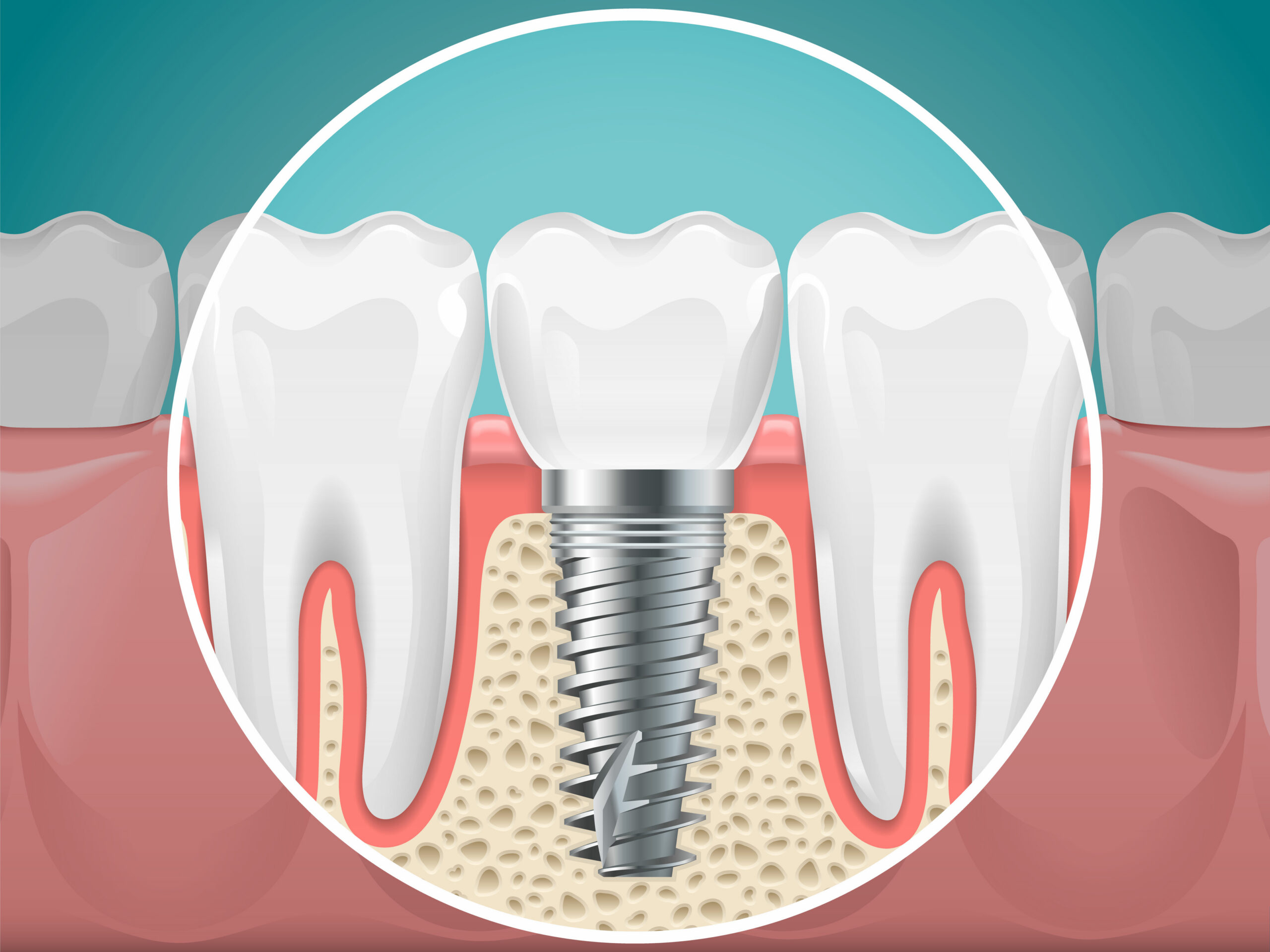
A single tooth implant replaces one missing tooth with a titanium post that is surgically placed into the jawbone, topped with a custom crown. The implant functions as an artificial root, fusing with the surrounding bone through a process called osseointegration. Since the implant stands independently, it does not involve the neighboring teeth at all.
This independence is one of the most significant advantages of a single tooth implant. Adjacent teeth remain untouched and structurally intact, an important consideration for patients who have otherwise healthy dentition on either side of the gap. Research published in BMC Oral Health found that single implant-supported crowns showed a five-year survival rate of 94.5%, underscoring their long-term reliability as a restorative option.
What Single Implant Treatment Typically Involves
Every case is different, but most single tooth implant treatment plans follow a similar sequence from the first consultation to the final restoration.
What Is an Implant-Supported Bridge?
An implant-supported bridge uses two implants to anchor a prosthetic that spans across a gap of two or more consecutive missing teeth. Rather than placing an implant for each missing tooth, the bridge connects to implants at either end, with one or more artificial teeth suspended in between. This makes it an efficient solution when multiple adjacent teeth are missing and the patient is not a candidate for individual implants at every site.
The bridge option can also be advantageous when bone volume in a specific area is insufficient to support an implant at every missing tooth position. In some cases, preparatory procedures such as bone grafting and sinus grafting may be recommended regardless of which treatment is chosen, but strategic bridge placement can sometimes reduce the total number of grafting procedures required.
Factors That Influence the Decision
Selecting between the two options is not simply a matter of preference. Several clinical considerations play a central role in the recommendation we make for each patient. The number and position of missing teeth is often the primary determining factor. A single tooth implant is ideal when only one tooth is absent, while an implant-supported bridge becomes the more practical choice when two or more consecutive teeth are missing. Other factors that influence the decision include the following.
A thorough evaluation, including cone beam CT imaging and a detailed clinical assessment, allows us to map out exactly what the bone and tissue can support before any treatment begins.
Comparing Long-Term Value and Cost
Cost is often the deciding factor once the clinical picture is clear. Our breakdown of dental implant costs in New Jersey covers typical pricing ranges in more detail, but the table below outlines how the two approaches generally compare.
| Single Tooth Implant | Implant-Supported Bridge | |
|---|---|---|
| Best suited for | One missing tooth | Two or more consecutive missing teeth |
| Implants required | One per missing tooth | Two, regardless of span length |
| Impact on adjacent teeth | None | None, though nearby bone and gum health still matter |
| Typical cost per replaced tooth | Higher per tooth | Often lower per tooth across a longer span |
When a Single Tooth Implant Is the Better Fit
If a patient is missing just one tooth and has adequate bone volume at the site, a single tooth implant is ideal. Preserving the integrity of adjacent teeth is a key benefit, as is the ability to clean the restoration like a natural tooth. There are no pontics to navigate under, and the implant continues to stimulate the jawbone, helping prevent the bone loss that naturally follows tooth extraction. Patients who are committed to long-term maintenance and have healthy gum tissue are often the best candidates.
When an Implant-Supported Bridge Makes More Sense
An implant-supported bridge is often the more appropriate choice when multiple adjacent teeth are missing. Replacing each missing tooth with its own implant in a confined space can be difficult from a surgical standpoint, and the bridge approach resolves this challenge without sacrificing stability or function. For patients who have already been through significant tooth loss and are exploring broader restoration, All-on-X implants may also be worth discussing as a comprehensive alternative.
The bridge option can also suit patients who are not ready for the extended timeline that comes with placing multiple individual implants, as fewer surgical sites can mean a more streamlined recovery process.
Why Your Gum Health Comes First
Neither a single tooth implant nor an implant-supported bridge holds up long-term without healthy, stable gum tissue supporting it. If active gum disease is present, we typically recommend addressing it before implant placement, whether through scaling and root planing or LANAP depending on how advanced the disease is. Patients with visible gum recession around the teeth adjacent to a planned implant site may also benefit from a minimally invasive option like pinhole surgery for gum recession before moving forward with tooth replacement, since a stable, well-positioned gumline supports a better long-term result for either restoration.
Choose Advanced Periodontics of NJ for Your Implant Consultation
At Advanced Periodontics of NJ, Dr. Matei and Dr. Peto bring advanced training and extensive clinical experience to every implant case. Dr. Matei completed specialized implantology training in Switzerland as an ITI Scholar and has co-authored publications in peer-reviewed journals focused on dental implants and tissue regeneration. She also holds the 2022 Educator Award for Excellence in Teaching and Mentoring in Periodontics from the American Academy of Periodontics and serves as faculty at the University of Pennsylvania School of Dental Medicine. Together, our team approaches each case with the diagnostic precision and surgical care that complex restorations require.
Whether a single tooth implant or an implant-supported bridge is the right solution for you, we will walk you through every step of the process with clear information and personalized care. Contact our office to schedule your consultation and take the first step toward a fully restored smile.
Frequently Asked Questions About Single Tooth Implants and Implant-Supported Bridges
How long does a single tooth implant take from start to finish?
Treatment typically spans several months from placement to final crown, since the implant needs time to fuse with the jawbone through osseointegration before it can safely support a crown. Most patients complete the process in three to six months, though healing time can vary based on bone quality and whether grafting is needed first.
Is an implant-supported bridge less expensive than replacing each tooth individually?
Often, yes. Because a bridge uses only two implants to support several replacement teeth, the total cost per missing tooth is generally lower than placing an individual implant at every site. The exact savings depend on how many teeth are being replaced and whether additional procedures like grafting are needed.
Can an implant-supported bridge be converted to individual implants later?
In some cases, yes, though it depends on the bone and gum conditions at the time. A periodontist would need to evaluate whether enough healthy bone remains to support additional individual implants. This is one of the reasons a thorough evaluation before treatment is so important.
Does dental insurance cover single tooth implants or implant-supported bridges?
Coverage varies widely by plan and by whether the tooth loss is classified as medically necessary. Many plans cover a portion of the crown or bridge work while covering less of the implant placement itself. Our team can help you understand your specific benefits before treatment begins.
What if my missing teeth are not next to each other?
When gaps are spread across the mouth rather than side by side, individual single tooth implants are usually recommended for each site rather than a bridge, since a bridge only works across one continuous span. A full evaluation will determine the most efficient combination of treatments for your case.