




Medically Reviewed by Dr. David Peto on September 10, 2026
 When bone loss in your upper jaw creates a roadblock to your dental implant surgery, a sinus lift procedure may be your path forward. This specialized technique builds the foundation needed for successful dental implants by carefully elevating the sinus membrane and adding bone where it’s needed most. However, not all sinus lifts are created equal. Choosing between internal and external approaches can significantly impact your treatment experience, recovery time, and results.
At Advanced Periodontics of N.J., our team provides comprehensive sinus lift procedures using both internal and external techniques. With our specialized training and state-of-the-art equipment, we can evaluate your specific case and recommend the most appropriate approach for your dental implant journey, ensuring optimal results with minimal discomfort.
Understanding Sinus Lift Basics
A sinus lift becomes necessary when there isn’t enough bone height in the upper jaw to support dental implants. This commonly occurs in the back of the upper jaw, where the maxillary sinuses are located. Bone loss in this region can result from the following conditions:
- Periodontal disease
- Tooth loss leading to bone deterioration
- Naturally large sinus cavities
- Congenitally missing teeth
- Previous trauma or extractions
This procedure involves carefully lifting the sinus membrane and placing bone graft material in the opening created. This new bone becomes integrated with your natural bone over several months, providing a solid foundation for dental implants. There are two types of sinus lifts: internal and external. The choice between these techniques depends on your specific anatomical structure and the amount of bone you need.
External Sinus Lift: The Traditional Approach
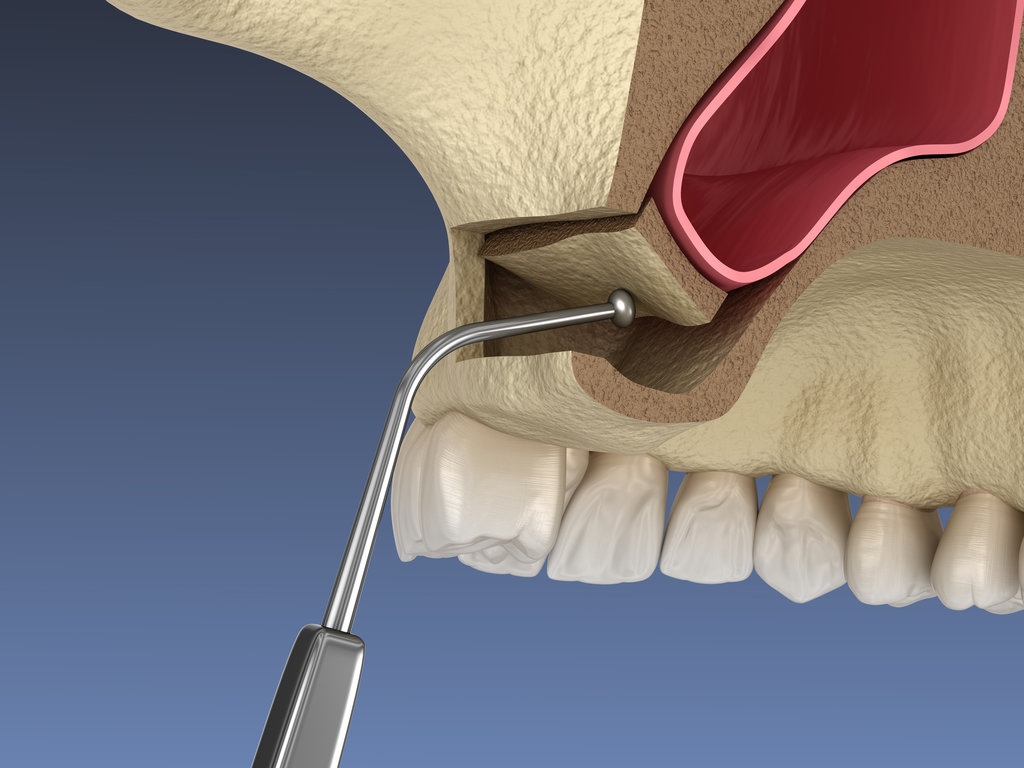
The external sinus lift, also known as the lateral window technique, is the more traditional approach. It is typically used when significant bone augmentation is required. This technique involves creating a small window in the side wall of the maxillary sinus to access and lift the sinus membrane.
Procedure Overview
During an external sinus lift, your periodontist makes an incision in the gum tissue to uncover the bone of the jaw. A small oval window is carefully created in the bone using specialized instruments. The sinus membrane is gently elevated away from the sinus floor through this window, creating a space for bone graft material. After placing the graft material, the area is covered with a collagen membrane before the gum tissue is sutured closed.
Ideal Candidates
The external approach is particularly beneficial for patients with less than 5mm of existing bone height. This technique provides greater access for the periodontist and allows for more substantial bone augmentation. It’s also preferred in the following situations:
- Multiple implants need to be placed in the posterior maxilla
- Significant vertical bone height is required
- The sinus anatomy is complex or irregular
- Previous sinus lift attempts were unsuccessful
The external approach provides the most predictable and effective way to create the substantial bone structure needed for successful implant placement.
Internal Sinus Lift: The Minimally Invasive Option
The internal sinus lift, also known as the transcrestal or osteotome technique, is a less invasive approach when moderate bone augmentation is needed. This technique approaches the sinus from within the implant preparation site rather than through a lateral window.
Procedure Overview
During an internal sinus lift, your periodontist creates the implant site using specialized drills, stopping just short of the sinus floor. Using osteotomes (special hand instruments), the bone between the implant site and the sinus membrane is carefully fractured and pushed upward, lifting the sinus membrane. The bone graft material is then placed into this space, and in many cases, the implant can be placed during the same procedure.
Ideal Candidates
The internal approach is best suited for patients with at least 5-6mm of existing bone height. This technique offers several advantages, including:
- Less invasive with a shorter healing time
- Often allows for simultaneous implant placement
- Reduced post-operative discomfort
- Fewer appointments needed
- Lower risk of complications
These qualities make the internal approach an excellent choice for patients with adequate existing bone who want to minimize recovery time and complete their implant treatment more efficiently.
Comparing Recovery and Results
Recovery differs considerably between these two techniques. With the internal approach, patients typically experience minimal swelling and discomfort that resolves within a few days. The external approach generally involves more significant swelling and discomfort, with recovery extending for 1-2 weeks.
Both techniques achieve excellent long-term results when performed by experienced professionals. The amount of bone gain possible varies: internal lifts typically provide 2-4mm of additional bone height, while external lifts can achieve 8-12mm or more. Your periodontist will determine which approach offers the best chance for successful implant placement based on your specific needs.
Contact Advanced Periodontics of N.J. for Expert Sinus Lift Care
At Advanced Periodontics of N.J., our experienced team provides personalized sinus lift procedures using both internal and external techniques. We utilize the latest technology and gentle approaches to make your experience as comfortable as possible. Our periodontists have extensive training in advanced bone grafting techniques, ensuring optimal results for your dental implant journey.
If you’re considering dental implants but have been told you need a sinus lift procedure, we can help determine the best treatment for your specific situation. Contact us today at (201) 940-7002 or through our contact form to schedule a consultation and take the first step toward confidently restoring your smile.
Frequently Asked Questions About Sinus Lift Techniques
What is the difference between an internal and external sinus lift?
An internal sinus lift, also called the transcrestal technique, approaches the sinus from within the implant site and works well when 5 to 6 millimeters of bone height already exists. An external sinus lift, or lateral window technique, creates access through the side of the jaw and is used when less than 5 millimeters of bone height is present or when a larger amount of bone needs to be added. Your periodontist chooses the approach based on your anatomy and treatment goals.
How much bone do I need for a sinus lift?
The amount of existing bone height in your upper jaw determines which sinus lift technique is appropriate. Patients with less than 5 millimeters of bone height typically need the external, lateral window approach, while those with 5 to 6 millimeters or more may be candidates for the less invasive internal approach. A periodontist evaluates your bone structure with imaging before recommending a technique.
How long does recovery take after a sinus lift?
Recovery time depends on which technique is used. Patients who have an internal sinus lift typically experience minimal swelling and discomfort that resolves within a few days. Patients who have an external sinus lift usually experience more noticeable swelling and discomfort, with recovery extending over one to two weeks. Your periodontist will give you specific aftercare instructions based on your procedure.
Can a dental implant be placed at the same time as a sinus lift?
In many cases, yes. With the internal sinus lift approach, the implant can often be placed during the same appointment as the bone grafting procedure. With the external sinus lift approach, more healing time is usually needed before the implant is placed, since a larger amount of new bone must integrate first. Your periodontist will determine the right timeline for your case.
Is a sinus lift a painful procedure?
Sinus lift procedures are performed under local anesthesia, so patients do not feel pain during the surgery itself. Afterward, some swelling and discomfort are normal, particularly with the external approach, but this is generally manageable with over-the-counter pain medication and typically improves within one to two weeks.
About the Author
Periodontist, Diplomate of the American Board of Periodontology
Dr. Peto is a Diplomate of the American Board of Periodontology and a former clinical instructor at UCLA. He provides periodontal care, including sinus lift and bone grafting procedures, for patients throughout River Edge, New Jersey, and the surrounding communities at Advanced Periodontics of N.J.